By now you've grown accustomed to the screens at the gas pump. Old news. But for DOOH people, good news. The premise is screens in high traffic areas for the purpose of creating advertising opportunities, and cash flow. I personally have not been a fan of the screens on the gas pumps so far, because the messages I have seen are useless and irrelevant to me.
But what if those messages were actually INDISPENSIBLE?!!! What if they provided me with essential information? Not weather, not a promo for a tv program, or some other lame thing. But something really important and relevant to me? Then I would probably be interested in a heartbeat. The point is not the screens or the gas pumps. The point is the CONTENT. The Message!
I am certainly not the first to beat this drum, and I won't be the last, but I will beat this drum nonetheless! DOOH has so much potential to drive traffic and sales. To promote. To inform. To sell. As DOOH providers we need to be more strategic about what we allow on our networks and our screens. I understand the need to get money in the door, but let's push for something more. Let's strategize engagement, and interactivity.
I work with a provider of content, Phase 3 Digital, that create and strategically distribute content and campaigns. We have recently brought a network of phone banks in airports online, with the first 2 of many airports, Denver and Palm Springs. Instead of pay phones, these phones provide free calls in the US and Internationally. But each phone also has a digital screen with sale-able content, as well as 5 buttons for direct connect to any client. In other words, a car rental agency can buy one of the buttons. Or a ticket company, etc. So the air passenger is walking along and needs to make a call but his cell phone is dead. He can charge his phone at this phone station while he makes a free call, and as he does so, he is facing a screen showing ads for hotels, events, destinations, offers, etc.
Bingo. Automatic engagement. Direct connection. Target audience. This is exactly the type of indispensible opportunity that DOOH must offer.
By the way, advertisers, the very first day online 2,000 people made calls on those phones!
We are also working with a vending machine company whose machines all feature video screens. Same thing: the viewer has an immediate engagement opportunity. Powerful.
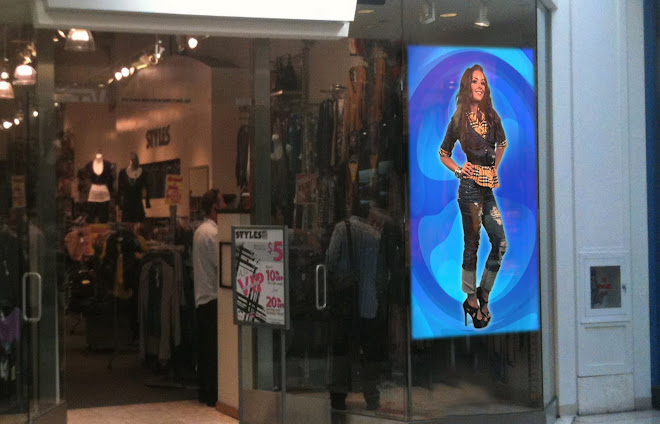
Gas pumps. Airport phones. Vending machines. Store windows. Get the message out, and get engaged.
Tuesday, November 20, 2012


Monday, October 29, 2012
Road to ROI
Return on Investment, or ROI, is how every investment decision in capital equipment, marketing materials, signage, is made by those who approve expenditures.
An objective is determined, a value assigned to that investment, and then some effort at due diligence in securing the best price (cost-effective) for that investment/purchase.
Someone determines that display and signage is necessary, someone identifies a budget, and then investments are made according to budget. When a new type of investment (in new technology) for signage or display comes under consideration, then the process begins anew for that particular investment. Perceived, and actual value are debated and assessed, not always from a fully-informed perspective, but usually some effort is expended in that direction.
The vendor does their best to convey the indispensability of their product; usually from a features/benefits standpoint, but not always in the terms or language that the potential investor uses. This is a key marketing and sales function:
"What will this investment do for me?" asks the potential buyer.
In the best possible scenario, the seller of the product has informed themselves diligently on the buyer's needs and valuation method, and can answer, "Here's how much this will make you/save you, over --- period of time." They articulate the value of the product in clear financial terms, and THEN restate the practical or functional values and features.
ROI gives the client/buyer the permission to invest in your product.
Window Video Systems (WVS) have clear, broad and deep ROI potential:
Display more of the client's product in a more dynamic, useful, attractive way than ever before. Never before has a retailer or business been able to display or demonstrate ALL of their products directly ON their storefront window, in full color and motion repeating the message. Never have they been able to repeat multiple or different kinds of messages, and especially, selling propositions, whether it be SALE, or pricing incentives, or other types of value propositions, or promotion of upcoming opportunities to the customer. WVS allows for interactive engagement with the viewing traffic, via QR or text to mobile device. WVS can drive traffic: both foot traffic in-store, or traffic to the Web, or to e-commerce portal. In the process, WVS can allow stores to "capture" viewers via engagement.
WVS is transformative. It has the potential to enable the retailer or other commercial business to transform how they communicate with customers with more immediacy and more depth.
Always look for ways to articulate and specify value to your OOH displays, to demonstrate ROI. It is the key to purchase approval. How does your OOH display provide ROI?
An objective is determined, a value assigned to that investment, and then some effort at due diligence in securing the best price (cost-effective) for that investment/purchase.
Someone determines that display and signage is necessary, someone identifies a budget, and then investments are made according to budget. When a new type of investment (in new technology) for signage or display comes under consideration, then the process begins anew for that particular investment. Perceived, and actual value are debated and assessed, not always from a fully-informed perspective, but usually some effort is expended in that direction.
The vendor does their best to convey the indispensability of their product; usually from a features/benefits standpoint, but not always in the terms or language that the potential investor uses. This is a key marketing and sales function:
"What will this investment do for me?" asks the potential buyer.
In the best possible scenario, the seller of the product has informed themselves diligently on the buyer's needs and valuation method, and can answer, "Here's how much this will make you/save you, over --- period of time." They articulate the value of the product in clear financial terms, and THEN restate the practical or functional values and features.
ROI gives the client/buyer the permission to invest in your product.
Window Video Systems (WVS) have clear, broad and deep ROI potential:
Display more of the client's product in a more dynamic, useful, attractive way than ever before. Never before has a retailer or business been able to display or demonstrate ALL of their products directly ON their storefront window, in full color and motion repeating the message. Never have they been able to repeat multiple or different kinds of messages, and especially, selling propositions, whether it be SALE, or pricing incentives, or other types of value propositions, or promotion of upcoming opportunities to the customer. WVS allows for interactive engagement with the viewing traffic, via QR or text to mobile device. WVS can drive traffic: both foot traffic in-store, or traffic to the Web, or to e-commerce portal. In the process, WVS can allow stores to "capture" viewers via engagement.
WVS is transformative. It has the potential to enable the retailer or other commercial business to transform how they communicate with customers with more immediacy and more depth.
Always look for ways to articulate and specify value to your OOH displays, to demonstrate ROI. It is the key to purchase approval. How does your OOH display provide ROI?
Monday, September 24, 2012
Projected Digital Signage II
Projections in store windows are attention-grabbing. It's one of the most exciting display methods available in the market today.
Except when you can't find someone to install one for you.
Except when you realize that having exciting images is something you have to pay for.
Except when you discover that not all video content is created equal.
Except when you discover there is more to buying a projector than you realized.
Except when you discover that there's more to installing that projector than you realized.
Except when you discover that most projectors are rather expensive to own, especially replacing their lamps every few months (because you wanted to actually USE your window video system every day!
Except when you realize that someone has to turn the system on and off every day.
Except when you realize that someone (you) has to come up with the design and flow of the visual content so that it's not just the same darn thing everyday, all day.
Except when you realize that finding a rear projection screen provider (in your area) is not that easy.
Except when you realize that finding and putting all this stuff together is ----ing expensive!!!
Except when you realize that finding the right hardware/software system to more easily manage your system is time-consuming and expensive!
Except,
Except,
Except.....
The purpose is not to discourage you. Take heart! We have figured all of this out for you. Window video systems by Looknglas are:
Affordable
Easy to install
Low (hardware) maintenance
Easy to use (we create and manage your messages for you!)
Green (enviro-friendly, saving paper, no lamp replacement, low energy consumption, no mercury in the lamp.)
Flexible
Powerful (able to display virtually unlimited images and messages!)
Awesome and exciting (see Digital Mannequin and Oakley Store videos.)
The possibilities are endless for retail display, in particular. Designers and Visual Merchandisers are adapting and adopting. The ability to show whatever you want, when you want, and change or add to the messaging is an absolute game-changer. So much so, that even the bigger chains are looking at it, and talking about implementing. (See article below.)
http://www.businessinsider.com/macys-announces-digital-mannequins-2012-5
Put your store on the map this holiday season.
Except when you can't find someone to install one for you.
Except when you realize that having exciting images is something you have to pay for.
Except when you discover that not all video content is created equal.
Except when you discover there is more to buying a projector than you realized.
Except when you discover that there's more to installing that projector than you realized.
Except when you discover that most projectors are rather expensive to own, especially replacing their lamps every few months (because you wanted to actually USE your window video system every day!
Except when you realize that someone has to turn the system on and off every day.
Except when you realize that someone (you) has to come up with the design and flow of the visual content so that it's not just the same darn thing everyday, all day.
Except when you realize that finding a rear projection screen provider (in your area) is not that easy.
Except when you realize that finding and putting all this stuff together is ----ing expensive!!!
Except when you realize that finding the right hardware/software system to more easily manage your system is time-consuming and expensive!
Except,
Except,
Except.....
The purpose is not to discourage you. Take heart! We have figured all of this out for you. Window video systems by Looknglas are:
Affordable
Easy to install
Low (hardware) maintenance
Easy to use (we create and manage your messages for you!)
Green (enviro-friendly, saving paper, no lamp replacement, low energy consumption, no mercury in the lamp.)
Flexible
Powerful (able to display virtually unlimited images and messages!)
Awesome and exciting (see Digital Mannequin and Oakley Store videos.)
The possibilities are endless for retail display, in particular. Designers and Visual Merchandisers are adapting and adopting. The ability to show whatever you want, when you want, and change or add to the messaging is an absolute game-changer. So much so, that even the bigger chains are looking at it, and talking about implementing. (See article below.)
http://www.businessinsider.com/macys-announces-digital-mannequins-2012-5
Put your store on the map this holiday season.
Thursday, August 30, 2012
POS Engagement
Customer experience, featuring interactivity (most commonly touch) is the coming thing in the retail industry. And rightly so.
Brick and mortar retail has the advantage over online retail in that they can provide a superior experience. After all, online can only provide so much, and all of it "virtual". But brick and mortar can provide "real" and people are hungering for ever more "real" experiences. Actual engaging interaction at the Point Of Sale (POS) is a huge distinction and advantage that the brick and mortar store can offer. Apple stores, Microsoft stores, AT&T's new interactive store, and even places like Cabela's and Bass Pro Shops are all great examples of retail POS engagement. The places that do it really well are destinations. You love going there. They keep it real and relevant.
Digital Signage can assist greatly in this POS engagement. Text campaigns, QR campaigns, Social Media campaigns, even simple signage promo campaigns that drive the viewer to interact in some distinct way with the store, its product or its personnel are all strategies that need to be employed via digital signage. Please don't stop with mere signage messaging; get that powerful DS or DOOH system working to engage people, especially customers, to add value, to enhance that vital (personal) business relationship. Every personal interaction you create enhances the relationship in so much more powerful a way than a "like" or a share.
You have the tools; step out of the box, figuratively and literally. Work on new ways to use your DS, especially Window Video Systems, to engage!
Brick and mortar retail has the advantage over online retail in that they can provide a superior experience. After all, online can only provide so much, and all of it "virtual". But brick and mortar can provide "real" and people are hungering for ever more "real" experiences. Actual engaging interaction at the Point Of Sale (POS) is a huge distinction and advantage that the brick and mortar store can offer. Apple stores, Microsoft stores, AT&T's new interactive store, and even places like Cabela's and Bass Pro Shops are all great examples of retail POS engagement. The places that do it really well are destinations. You love going there. They keep it real and relevant.
Digital Signage can assist greatly in this POS engagement. Text campaigns, QR campaigns, Social Media campaigns, even simple signage promo campaigns that drive the viewer to interact in some distinct way with the store, its product or its personnel are all strategies that need to be employed via digital signage. Please don't stop with mere signage messaging; get that powerful DS or DOOH system working to engage people, especially customers, to add value, to enhance that vital (personal) business relationship. Every personal interaction you create enhances the relationship in so much more powerful a way than a "like" or a share.
You have the tools; step out of the box, figuratively and literally. Work on new ways to use your DS, especially Window Video Systems, to engage!
Friday, August 10, 2012
Ahead of the Game
Some ideas are just a wee bit ahead of their time. If you're a techno-geek/gadget fan, if you scour Mashable daily for cool new technology breakthroughs and products, if you're always looking for the next new cool thing, then you already know this: Technology always far outstrips the marketplace's willingness or ability to adopt. That may never have been truer than today, with a worldwide recession keeping a damper on things, at the same time as unprecedented tech advances continue to come around the bend.
This blog being about DOOH generally, and Window Video Systems (projected digital signage) in particular, I am pleased to announce that the reasons why WVS has not caught on faster in the retail space are starting to disappear. Sheer unfamiliarity is the least of these, and the proliferation of screens of all types being used for display has blown that one away. But for WVS, one big problem has been cost of ownership (projectors aren't cheap, and they're not cheap to maintain when you want to run them 24/7 or even daily.)
A constant stream of upgrading projectors is addressing this, with smaller and smaller projectors getting brighter and brighter. Costs are likewise coming down. Most importantly, new projection lamp technologies are directly affecting the issue of lamp life and/or lamp replacement, for the better.
Another issue has been a general lack of expertise in terms of creation, deployment and management of content for WVS systems designed for retail use. This is also an area where costs have been somewhat prohibitive for higher-effect content look and execution. I can happily report that Looknglas is bringing increasing expertise and flair to the content creation and management issue. Better method, as well as efficiencies are on the way.
What this means is, Window Video Systems for retail are more easily available in terms of cost, price and content creation/management than ever before, by a significant increment. Bottom shelf pricing of systems, attainable by even the humblest retailers, will be a welcome development for the retail sector, and should contribute to a continuing transformation of retail display, messaging, and customer experience.
This blog being about DOOH generally, and Window Video Systems (projected digital signage) in particular, I am pleased to announce that the reasons why WVS has not caught on faster in the retail space are starting to disappear. Sheer unfamiliarity is the least of these, and the proliferation of screens of all types being used for display has blown that one away. But for WVS, one big problem has been cost of ownership (projectors aren't cheap, and they're not cheap to maintain when you want to run them 24/7 or even daily.)
A constant stream of upgrading projectors is addressing this, with smaller and smaller projectors getting brighter and brighter. Costs are likewise coming down. Most importantly, new projection lamp technologies are directly affecting the issue of lamp life and/or lamp replacement, for the better.
Another issue has been a general lack of expertise in terms of creation, deployment and management of content for WVS systems designed for retail use. This is also an area where costs have been somewhat prohibitive for higher-effect content look and execution. I can happily report that Looknglas is bringing increasing expertise and flair to the content creation and management issue. Better method, as well as efficiencies are on the way.
What this means is, Window Video Systems for retail are more easily available in terms of cost, price and content creation/management than ever before, by a significant increment. Bottom shelf pricing of systems, attainable by even the humblest retailers, will be a welcome development for the retail sector, and should contribute to a continuing transformation of retail display, messaging, and customer experience.
Wednesday, June 27, 2012
The "I" effect on Digital Signage
I love my iPhone. Ipad owners love their iPads. Ipod users love their iPods.
You know why that is? Because they're great products: they're well-designed and they work great and do more than you really need them to, but it's great just knowing they can do all that cool stuff.
Digital Signage and Digital Out of Home devices have only partial coolness. The technology is usually pretty good, but content and ease of use, as well as method, are hit and miss.
That is the great burden which we must bear and find ways to ease: we live in a generation that is conditioned to unbelievably great products like what Apple has produced and ubiquitously popularized, so everything and everyone else has to try to measure up. This is a heavy burden indeed.
With DS and DOOH there are very very few places you can go to receive the type of integrated great end result for purposes like retail, at a cost effective price. The hardware company wants to sell their components, the SaaS or Signage management company wants to sell you their system, the integrator wants to tell you they can put it all together for you, and the content provider wants sell you on their content capabilities. Imagine if iPhones were sold that way.
You'll argue that apps have to be sold or downloaded separately. True, but the devices themselves come with so many useful apps and valuable capability, and then the downloading of free apps is so easy, that DS and DOOH pale by comparison. It is not a end-user-friendly proposition, especially for retailers.
But that is what it needs to be. Discovering the right level of user tolerance and acceptance/ease-of-use is the task.
I put it to you retail merchandisers: What would you expect to pay for a Digital Signage solution that was easy for you to use on a daily basis in your store window? More specifically, what would you expect to pay for a window video system, like a Digital Mannequin, such as the one shown here:
Or such as the one depicted here in the Oakley store:
I would be interested in all your thoughts on pricing such systems. Let me know!
You know why that is? Because they're great products: they're well-designed and they work great and do more than you really need them to, but it's great just knowing they can do all that cool stuff.
Digital Signage and Digital Out of Home devices have only partial coolness. The technology is usually pretty good, but content and ease of use, as well as method, are hit and miss.
That is the great burden which we must bear and find ways to ease: we live in a generation that is conditioned to unbelievably great products like what Apple has produced and ubiquitously popularized, so everything and everyone else has to try to measure up. This is a heavy burden indeed.
With DS and DOOH there are very very few places you can go to receive the type of integrated great end result for purposes like retail, at a cost effective price. The hardware company wants to sell their components, the SaaS or Signage management company wants to sell you their system, the integrator wants to tell you they can put it all together for you, and the content provider wants sell you on their content capabilities. Imagine if iPhones were sold that way.
You'll argue that apps have to be sold or downloaded separately. True, but the devices themselves come with so many useful apps and valuable capability, and then the downloading of free apps is so easy, that DS and DOOH pale by comparison. It is not a end-user-friendly proposition, especially for retailers.
But that is what it needs to be. Discovering the right level of user tolerance and acceptance/ease-of-use is the task.
I put it to you retail merchandisers: What would you expect to pay for a Digital Signage solution that was easy for you to use on a daily basis in your store window? More specifically, what would you expect to pay for a window video system, like a Digital Mannequin, such as the one shown here:
Or such as the one depicted here in the Oakley store:
I would be interested in all your thoughts on pricing such systems. Let me know!
Thursday, June 7, 2012
Engagement is the Goal? What about the Wedding?!
I read a lot about engagement these days, especially as it relates to social media, but also as it relates to DS and DOOH.
One guy wrote: "It's all about engagement!"
I said to myself, "really?"
If I had told that to my wife in response to her questions about wedding planning, I think there would have been a major sit-down-hash-it-out discussion.
Social media promoters keep telling us it's all about the engagement, but as a consumer/viewer/target audience member, I want to know "When's the wedding?" What's in it for me? What's the pay off? Where's the beef?
And every good business decision maker asks the same thing from their point of view: "When's this stuff going to start producing a profit for us?"
Engagement is good, but it is only a step in the process which must lead to a wedding, a consummation, a business transaction. There's got to be a point to it, at least, for us business people who want to make money.
So here's my point: Engage me, FOR THE PURPOSE OF LEADING ME TO PURCHASE. If you want to make money, you must engage for the purpose of having a business relationship. Not just any old relationship, not a casual fling, or a one-night stand. An honest-to-goodness business relationship, where something is actually sold, something purchased, a want or need is met.
If it's only about engagement, that sounds like an exercise in futility and time-wasting. I would not suggest investing a cent in a game, event, or display if it doesn't lead, in a direct way, to a purchase, and a successful, satisfying, win-win "relationship".
Now that's something I can "Like".
One guy wrote: "It's all about engagement!"
I said to myself, "really?"
If I had told that to my wife in response to her questions about wedding planning, I think there would have been a major sit-down-hash-it-out discussion.
Social media promoters keep telling us it's all about the engagement, but as a consumer/viewer/target audience member, I want to know "When's the wedding?" What's in it for me? What's the pay off? Where's the beef?
And every good business decision maker asks the same thing from their point of view: "When's this stuff going to start producing a profit for us?"
Engagement is good, but it is only a step in the process which must lead to a wedding, a consummation, a business transaction. There's got to be a point to it, at least, for us business people who want to make money.
So here's my point: Engage me, FOR THE PURPOSE OF LEADING ME TO PURCHASE. If you want to make money, you must engage for the purpose of having a business relationship. Not just any old relationship, not a casual fling, or a one-night stand. An honest-to-goodness business relationship, where something is actually sold, something purchased, a want or need is met.
If it's only about engagement, that sounds like an exercise in futility and time-wasting. I would not suggest investing a cent in a game, event, or display if it doesn't lead, in a direct way, to a purchase, and a successful, satisfying, win-win "relationship".
Now that's something I can "Like".
Subscribe to:
Posts (Atom)
