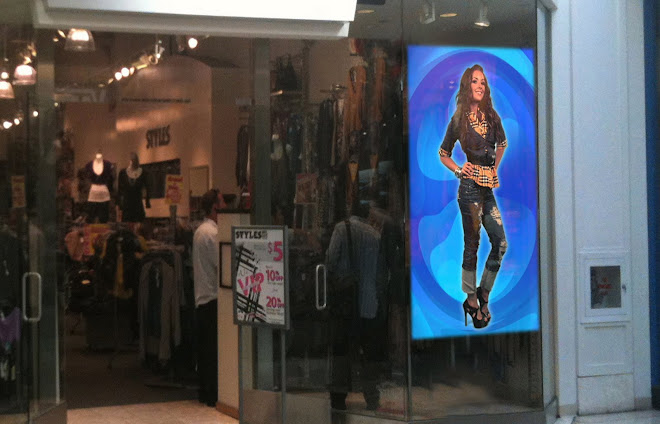
"Content is King!"
So says everyone. Except the majority of business decision-makers, who tend to fasten on hardware and software and price. They can't help it; they just gotta know "how much will this cost me?"
For any DOOH or other digital signage display, the content is critical. With all the advances over the past 5 years or so, the issue of high-quality content is still a tough one, because, face it, true creative costs something.
Example: I just spoke with a major international brand that is installing a very large, multi-tile video wall in their corporate Headquarters lobby, where everyone will see it. Great idea!
But they decided, for content, they will go with their in-house app-designer because they don't have a budget for content. Now, keep in mind, this company manufactures key components for digital displays. They are a major player.
Ya gotta be kidding me!!! You have budget to install a very large multi-tile video wall, but you forgot to allocate ANY budget toward content???!!!
So much for "Content is King." Truth is, for so many otherwise smart business decision-makers, content is an ugly step-child, neglected and unwanted. Shoot, the content should just come with this great hardware, right?
So the King, the prince, is actually a pauper. No one will give him a dime.
When was the last time you saw a truly engaging, stop-you-in-your tracks digital display? Uhh, let me see.... you don't really see them very often, and the reason is, decision-makers focus on hardware and widgets. Something they can negotiate hard. Something they can commoditize. But the all-important content, the message, the thing that actually makes people move, THAT is too expensive, don't have a budget for it, we'll do it in-house.
This is a major reason why this industry doesn't rocket forward. The value (content) is a tough sell.
People, please: Set budget for this critical component of your display implementation. If you're a systems seller, or a software seller, or an integrator, get the client to put some cold hard cash value towards their implementation's content! It will make you look good, and they'll stand a better chance of getting the true value out of their purchase that they intended. And you'll sell more.
Showing posts with label engagement. Show all posts
Showing posts with label engagement. Show all posts
Friday, August 30, 2013


Thursday, May 9, 2013
Digital Signage and ROI
Phil Cohen cracks me up.
He does a video blog called "Cohen on Content" http://onthecspot.com/archives/1070 dishes on all things DS and DOOH. Being a successful owner of a network himself for years, he knows a thing or two about the subject.
So I was watching his latest post, and though he takes a while to get going, he makes some great points.
Point 1: Don't think you're going to create DS content with Powerpoint. You don't want him coming after you speaking a language he knows you'll understand. (He speaks fluent baseball bat.)
Points 2-10: It's not about impressions. It's not about eyeballs. It's about making money. You have to have engagement, and a way to prove that engagement, be it third party corroboration, sales, track-able promotions, or whatever, you need to show that you are accomplishing something, preferably making money.
DS and DOOH are not about putting up a screen where you think a bunch of people will see it. It is about effectively accomplishing serious business objectives. And you don't do that by being the next DIY digital signage failure. You do it by knowing what you're doing; what hardware and software platforms are apropos to your purpose, and what content and strategy will accomplish that purpose.
"It's about making money!" he says. And I say,
"Bravo, Phil!"
Thursday, January 3, 2013
Projection-based Digital Signage
I thought it time to revisit this topic from a previous post ("Projected Digital Signage"), to check on the progress of the method.
It would appear that progress is there from a potential standpoint, but not in terms of actual use. Let me break it down:
Progress: Components and system software/management continue to improve with prices coming down. More companies appear to be showing interest in Digital Signage, especially for retail Point-of-sale (POS), and coming out with newer, more versatile components.
A lot of interest has been paid to touch screen technology as it relates to engagement.
The projector industry continues to advance; they have all the capabilities, but they don't seem to be focusing on their product so much as a primary element of digital signage, though more and more seem to be factoring that possibility into their design and features.
We have come up with a solution for the issues of direct sunlight and refracted glare, especially from multiple sources. Since glare can play havoc with any projection or other screen behind glass, (such as a store window,) this is a significant step.
More and more people continue to express and demonstrate interest in the method, trying it out, but not a lot of long term installs yet. This should change as we demonstrate lower cost of ownership, and higher value of use.
Needs Improvement: Pricing needs to come more into line with a level more accessible on a widespread basis.
Most implementations are temporary, and isolated. To date, I am not aware of any chain which has adopted projected signage across their brand.
Although the method has been used to create "engagement", that engagement has been mostly on a gimmicky, "look what we can do" basis, but not in a functional, ROI-based way to engage the viewing audience for the purpose of directly doing business. This is a key change that needs to occur. So far most installs have been strictly for display. The method needs to be adapted to more transaction-based purposes, for promotion, and especially sales.
More attention needs to be paid to content production specific to the method, and specific to ROI-based objectives.
Below is an example of a WVS implementation with some of the problems I point out:
Although the method has undeniable coolness, its viability for business will not come to fruition until these issues are resolved.
Overall, projection systems for retail have not made the jump to serious, affordable, long-term business solution. I believe that chasm can be crossed, but the issues mentioned above need to be addressed.
At Looknglas, we have addressed these issues. When the marketplace comes to grips with the reality that these systems are not widgets, but rather, serious communications and POS marketing solutions, the Window Video System will have arrived.
The Window of Opportunity is here: the problems have been solved by Looknglas. Let us help you develop your POS window display and promo system for true, measurable ROI.
Monday, December 17, 2012
Split Screen = Divided Loyalties
I know this has been addressed before by other of my fellow curmudgeons keeping an eye on the doings in DOOH. Yet the issue remains:
More than one message per screen diminishes the effectiveness of the whole. The infamous "L". A main screen, with a column on the right or left side, accompanied by a lower banner across the entire bottom of the screen, often with a data stream.
Two words: TOO BUSY!
I know this will not stop anyone from using this screen configuration. I know it will not stop the average ad salesperson from trying to sell all those different screen opportunities. But people, please, listen: as a visual layout, this absolutely blows!
The next time you see a digital screen in the marketplace, if it has this layout, I want you to consciously try to notice whether your own eye finds it easy to take in all the messages, images and data that this format presents. I already know the answer.
I totally agree that all of the small screen should be utilized; just not in this manner. This is a content creation issue. This is an issue of actually thinking about your viewer, and caring about whether they will care. Your content better be interesting and relevant. It better grab their attention and deliver the "goods" (message) in a meaningful, useful way, or you risk committing the deadly sin of diminishing (or even completely immasculating) your own medium.
Focus on the want/need/interest/preference of your target viewer. Spend some serious time and money on your content development. You might make a little money this month with a poor ad campaign on behalf of your clients, but not next month. If it does not work, they will not continue to buy. If your network does not produce the desired effect (usually some measurable business-related result) your clients will stop buying and go elsewhere. There are too many opportunities and options available to their ad dollar.
There may (on rare occasions) be legitimate times to utilize a split screen, but I can't think of what they are off-hand. Don't divide your screen (message). Better to shorten your ad units and ad more inventory, than to have multiple disparate messages on one screen at the same time.
Tuesday, November 20, 2012
Screens on the Machines
By now you've grown accustomed to the screens at the gas pump. Old news. But for DOOH people, good news. The premise is screens in high traffic areas for the purpose of creating advertising opportunities, and cash flow. I personally have not been a fan of the screens on the gas pumps so far, because the messages I have seen are useless and irrelevant to me.
But what if those messages were actually INDISPENSIBLE?!!! What if they provided me with essential information? Not weather, not a promo for a tv program, or some other lame thing. But something really important and relevant to me? Then I would probably be interested in a heartbeat. The point is not the screens or the gas pumps. The point is the CONTENT. The Message!
I am certainly not the first to beat this drum, and I won't be the last, but I will beat this drum nonetheless! DOOH has so much potential to drive traffic and sales. To promote. To inform. To sell. As DOOH providers we need to be more strategic about what we allow on our networks and our screens. I understand the need to get money in the door, but let's push for something more. Let's strategize engagement, and interactivity.
I work with a provider of content, Phase 3 Digital, that create and strategically distribute content and campaigns. We have recently brought a network of phone banks in airports online, with the first 2 of many airports, Denver and Palm Springs. Instead of pay phones, these phones provide free calls in the US and Internationally. But each phone also has a digital screen with sale-able content, as well as 5 buttons for direct connect to any client. In other words, a car rental agency can buy one of the buttons. Or a ticket company, etc. So the air passenger is walking along and needs to make a call but his cell phone is dead. He can charge his phone at this phone station while he makes a free call, and as he does so, he is facing a screen showing ads for hotels, events, destinations, offers, etc.
Bingo. Automatic engagement. Direct connection. Target audience. This is exactly the type of indispensible opportunity that DOOH must offer.
By the way, advertisers, the very first day online 2,000 people made calls on those phones!
We are also working with a vending machine company whose machines all feature video screens. Same thing: the viewer has an immediate engagement opportunity. Powerful.
Gas pumps. Airport phones. Vending machines. Store windows. Get the message out, and get engaged.
Monday, October 29, 2012
Road to ROI
Return on Investment, or ROI, is how every investment decision in capital equipment, marketing materials, signage, is made by those who approve expenditures.
An objective is determined, a value assigned to that investment, and then some effort at due diligence in securing the best price (cost-effective) for that investment/purchase.
Someone determines that display and signage is necessary, someone identifies a budget, and then investments are made according to budget. When a new type of investment (in new technology) for signage or display comes under consideration, then the process begins anew for that particular investment. Perceived, and actual value are debated and assessed, not always from a fully-informed perspective, but usually some effort is expended in that direction.
The vendor does their best to convey the indispensability of their product; usually from a features/benefits standpoint, but not always in the terms or language that the potential investor uses. This is a key marketing and sales function:
"What will this investment do for me?" asks the potential buyer.
In the best possible scenario, the seller of the product has informed themselves diligently on the buyer's needs and valuation method, and can answer, "Here's how much this will make you/save you, over --- period of time." They articulate the value of the product in clear financial terms, and THEN restate the practical or functional values and features.
ROI gives the client/buyer the permission to invest in your product.
Window Video Systems (WVS) have clear, broad and deep ROI potential:
Display more of the client's product in a more dynamic, useful, attractive way than ever before. Never before has a retailer or business been able to display or demonstrate ALL of their products directly ON their storefront window, in full color and motion repeating the message. Never have they been able to repeat multiple or different kinds of messages, and especially, selling propositions, whether it be SALE, or pricing incentives, or other types of value propositions, or promotion of upcoming opportunities to the customer. WVS allows for interactive engagement with the viewing traffic, via QR or text to mobile device. WVS can drive traffic: both foot traffic in-store, or traffic to the Web, or to e-commerce portal. In the process, WVS can allow stores to "capture" viewers via engagement.
WVS is transformative. It has the potential to enable the retailer or other commercial business to transform how they communicate with customers with more immediacy and more depth.
Always look for ways to articulate and specify value to your OOH displays, to demonstrate ROI. It is the key to purchase approval. How does your OOH display provide ROI?
Wednesday, June 27, 2012
The "I" effect on Digital Signage
I love my iPhone. Ipad owners love their iPads. Ipod users love their iPods.
You know why that is? Because they're great products: they're well-designed and they work great and do more than you really need them to, but it's great just knowing they can do all that cool stuff.
Digital Signage and Digital Out of Home devices have only partial coolness. The technology is usually pretty good, but content and ease of use, as well as method, are hit and miss.
That is the great burden which we must bear and find ways to ease: we live in a generation that is conditioned to unbelievably great products like what Apple has produced and ubiquitously popularized, so everything and everyone else has to try to measure up. This is a heavy burden indeed.
With DS and DOOH there are very very few places you can go to receive the type of integrated great end result for purposes like retail, at a cost effective price. The hardware company wants to sell their components, the SaaS or Signage management company wants to sell you their system, the integrator wants to tell you they can put it all together for you, and the content provider wants sell you on their content capabilities. Imagine if iPhones were sold that way.
You'll argue that apps have to be sold or downloaded separately. True, but the devices themselves come with so many useful apps and valuable capability, and then the downloading of free apps is so easy, that DS and DOOH pale by comparison. It is not a end-user-friendly proposition, especially for retailers.
But that is what it needs to be. Discovering the right level of user tolerance and acceptance/ease-of-use is the task.
I put it to you retail merchandisers: What would you expect to pay for a Digital Signage solution that was easy for you to use on a daily basis in your store window? More specifically, what would you expect to pay for a window video system, like a Digital Mannequin, such as the one shown here:
Or such as the one depicted here in the Oakley store:
I would be interested in all your thoughts on pricing such systems. Let me know!
Thursday, June 7, 2012
Engagement is the Goal? What about the Wedding?!
I read a lot about engagement these days, especially as it relates to social media, but also as it relates to DS and DOOH.
One guy wrote: "It's all about engagement!"
I said to myself, "really?"
If I had told that to my wife in response to her questions about wedding planning, I think there would have been a major sit-down-hash-it-out discussion.
Social media promoters keep telling us it's all about the engagement, but as a consumer/viewer/target audience member, I want to know "When's the wedding?" What's in it for me? What's the pay off? Where's the beef?
And every good business decision maker asks the same thing from their point of view: "When's this stuff going to start producing a profit for us?"
Engagement is good, but it is only a step in the process which must lead to a wedding, a consummation, a business transaction. There's got to be a point to it, at least, for us business people who want to make money.
So here's my point: Engage me, FOR THE PURPOSE OF LEADING ME TO PURCHASE. If you want to make money, you must engage for the purpose of having a business relationship. Not just any old relationship, not a casual fling, or a one-night stand. An honest-to-goodness business relationship, where something is actually sold, something purchased, a want or need is met.
If it's only about engagement, that sounds like an exercise in futility and time-wasting. I would not suggest investing a cent in a game, event, or display if it doesn't lead, in a direct way, to a purchase, and a successful, satisfying, win-win "relationship".
Now that's something I can "Like".
Subscribe to:
Posts (Atom)
